Industrial 3D printing services from our workshop near Cambridge: SLA, Carbon DLS, FDM and DLP. Most jobs are ready the next day, with tolerances to ±0.15 mm and overnight delivery across the UK. Check form, fit and function early, so you learn faster and avoid costly decisions. Our guide to 3D printed prototypes explains how to run a fast prototyping loop.
SLA gives the finest detail and FDM builds the largest parts, up to 800 × 800 × 1,000 mm. We choose the process for each job.
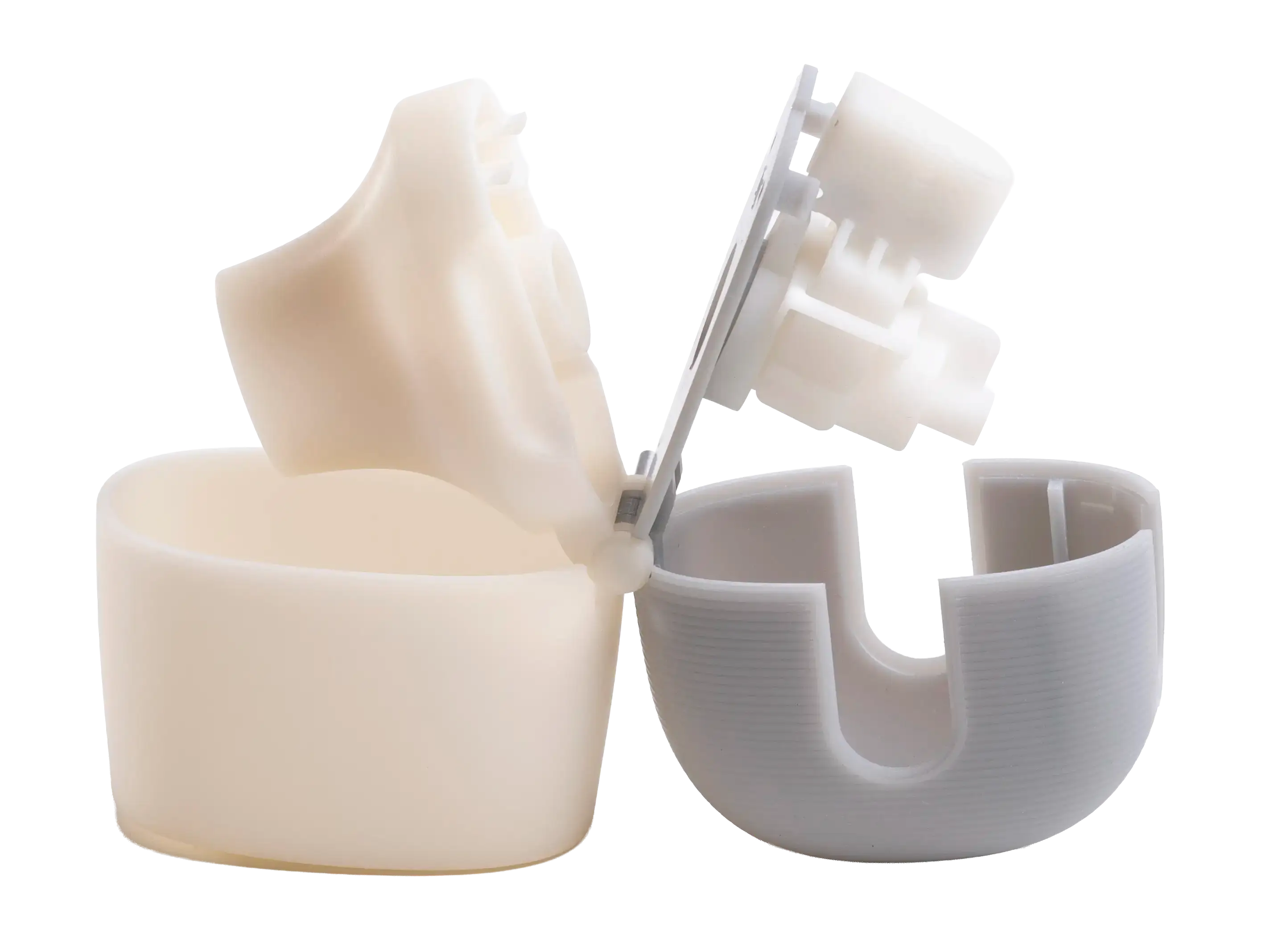
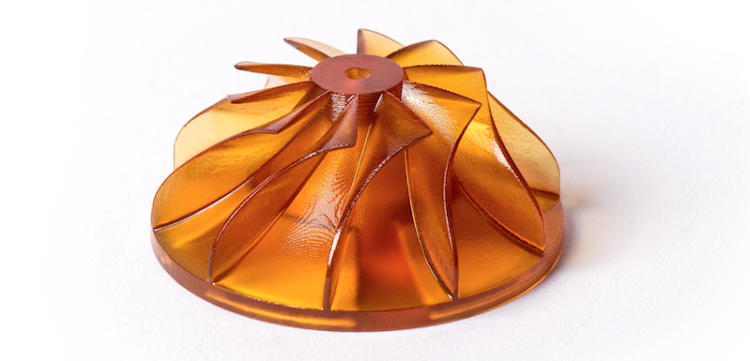
SLA gives the accuracy that medical devices and intricate assemblies need. Parts come out clean, with fine detail and a smooth surface. For transparent parts, see clear 3D printing.
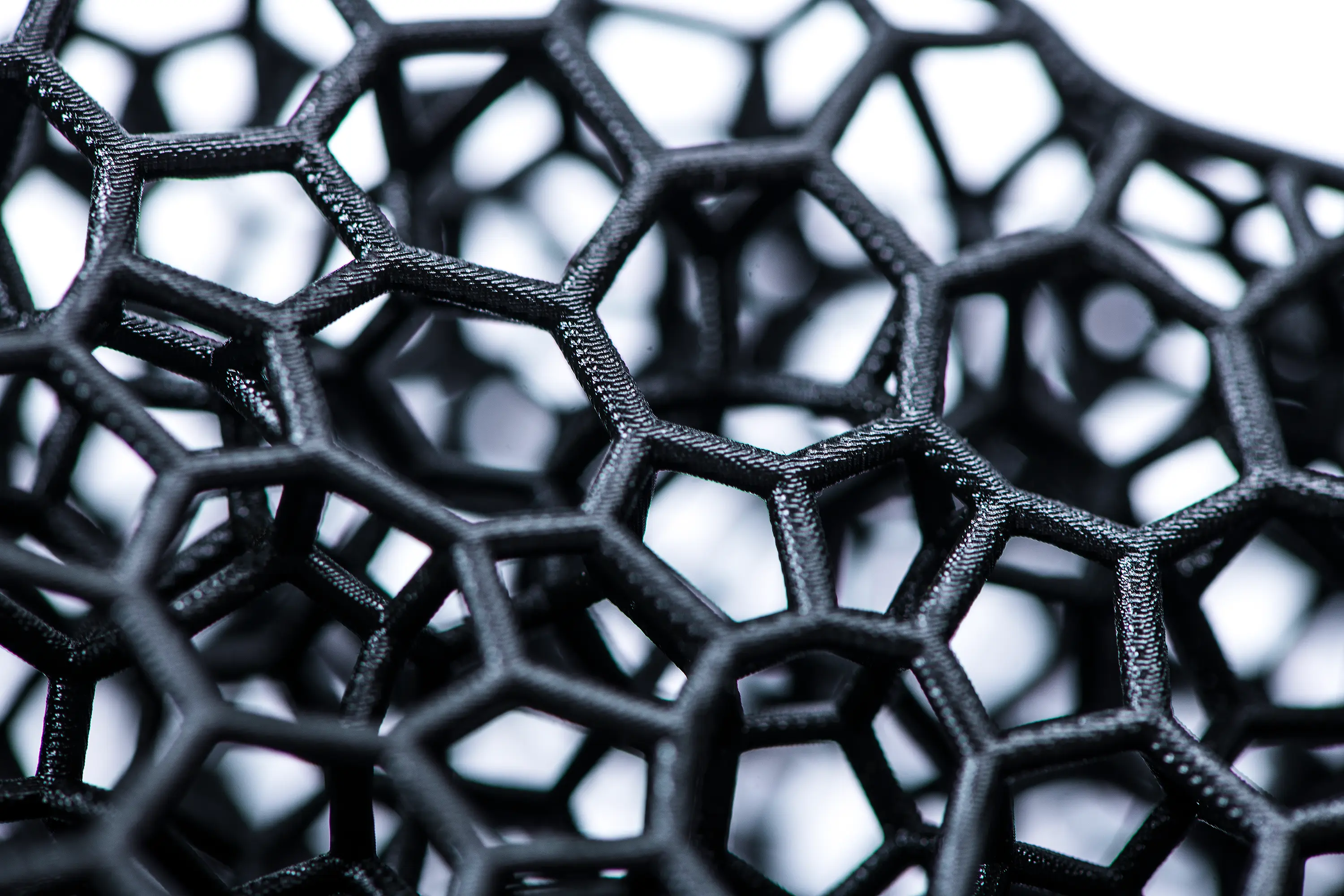
Carbon DLS makes stiff, strong parts that come out the same every time. Use it for engineering prototypes and end-use parts.
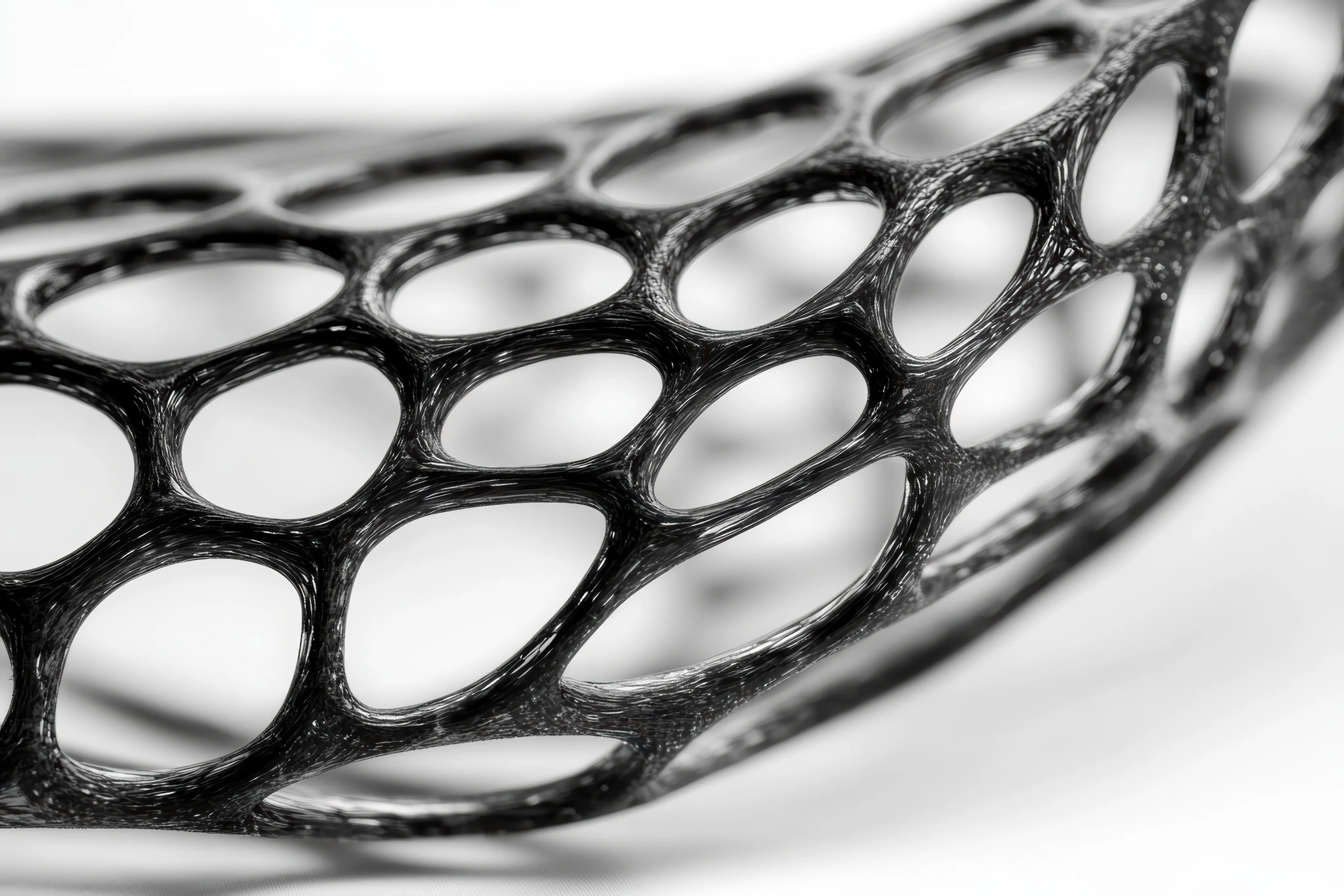
FDM builds parts in real thermoplastics, up to 800 × 800 × 1,000 mm, and holds ±0.4 mm on suitable rigid parts. It suits functional prototypes, jigs and fixtures, and short runs where strength, size and practicality matter most.
For big parts, see large format 3D printing.
See FDM 3D printing for the filaments we run.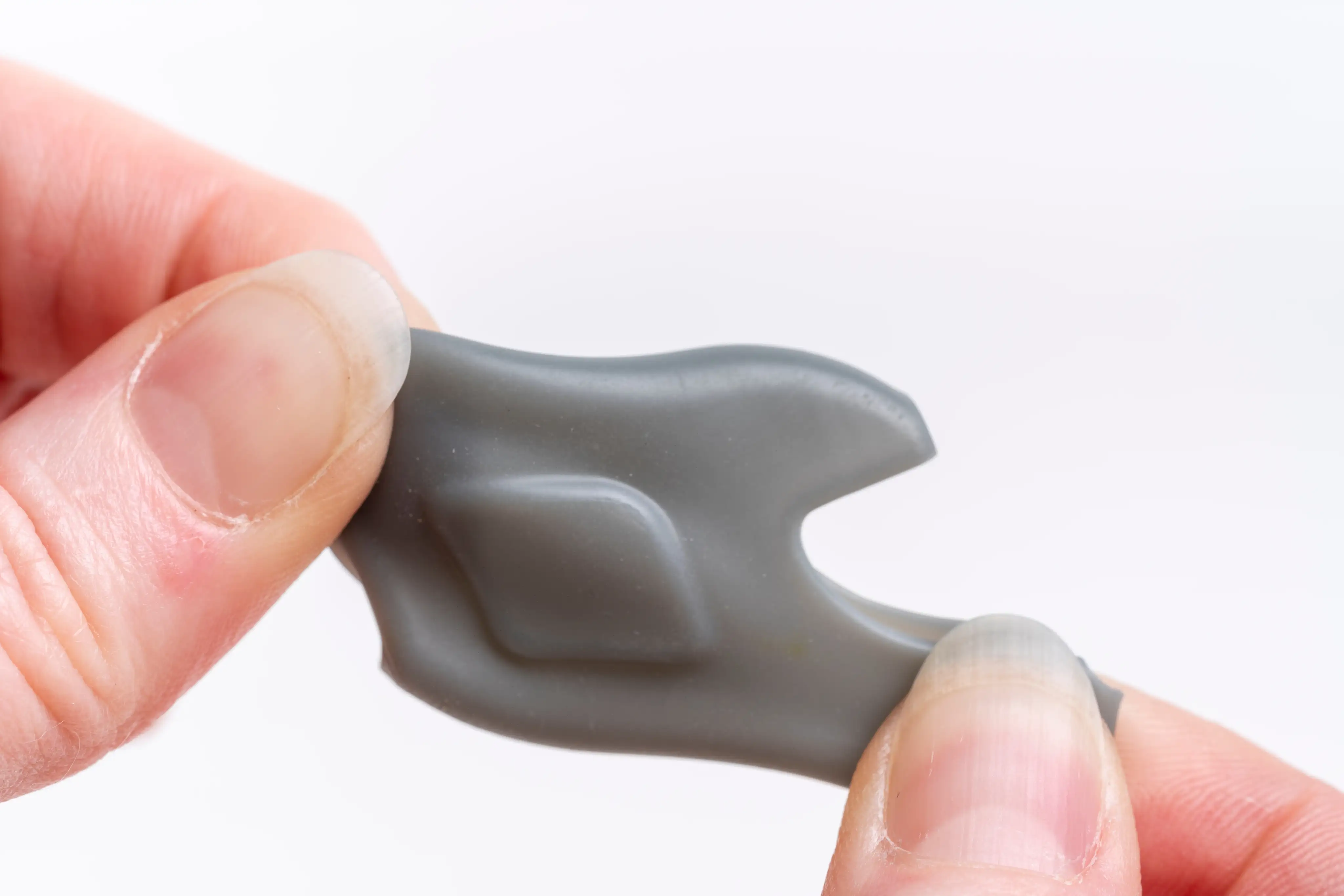
Most parts print overnight and are ready the next morning, so you can test a real part before deciding on the next change.
DLP resins include AMD-3 for high-resolution models, Sunlu Nylon-Like for tougher parts and SuperHDT for high temperatures.
Most parts print overnight and are ready in the morning. That lets you test a real part, not a render, and change the design fast.
We have plenty of 3D printing capacity, and 24 hours is our standard turnaround across a range of materials. We aim to quote SLA within 2 hours, and accepted jobs usually go on the build the same day. High and standard resolution parts can print at the same time on the same large format machine. Accuracy comes from knowing the process, not from default settings. Our technicians choose the build orientation for each part. For batches, see our low-volume production 3D printing.
Medical work needs close tolerances and the right material. We print surgical guides, housings for diagnostic devices and detailed assemblies where accuracy matters, in SLA and in biocompatible Carbon DLS resins.
More on medical device prototyping, including biocompatible materials and NDAs.
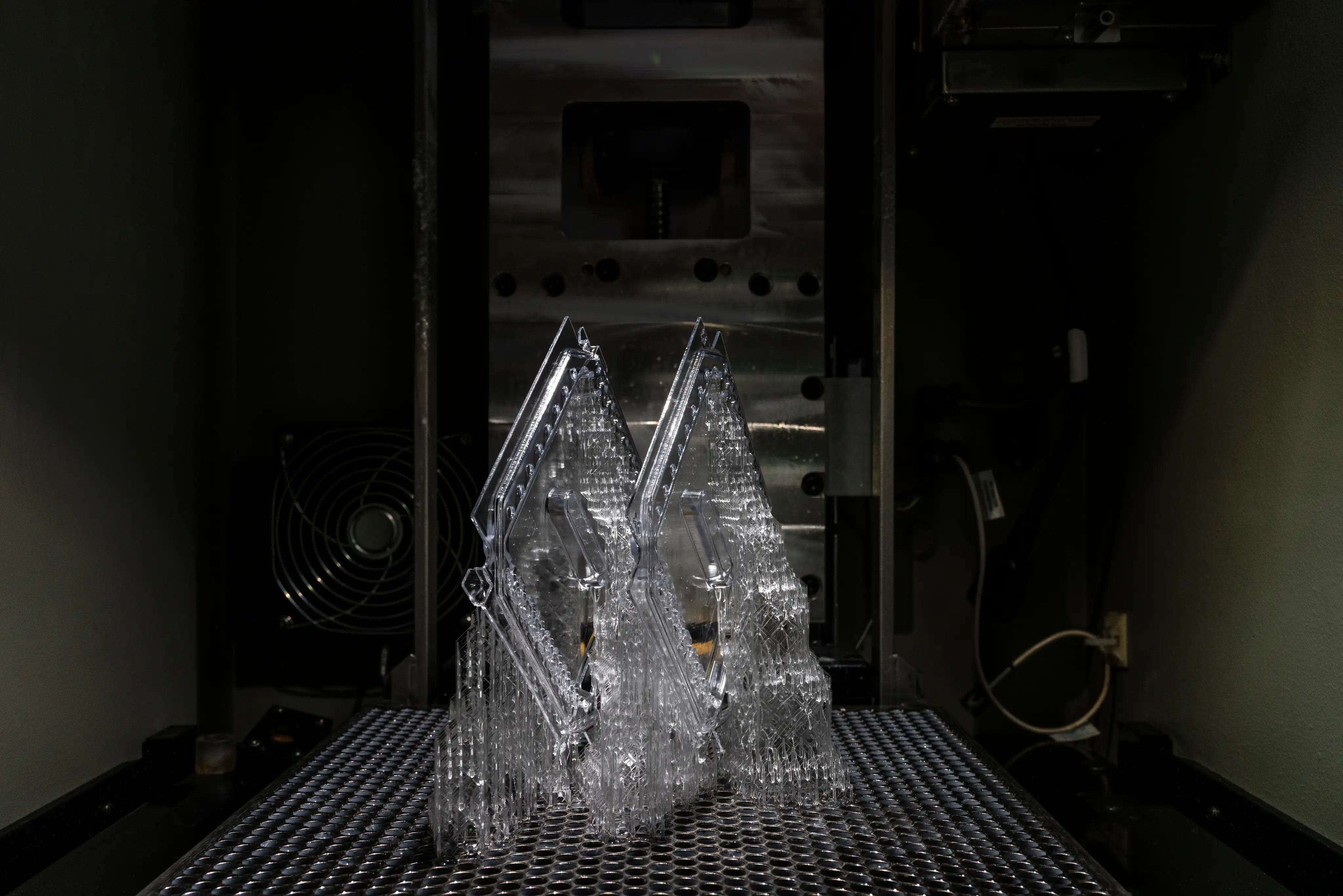
We print in medical-grade resins, aerospace polymers and consumer thermoplastics. We match the material to the job, so your parts work where it counts.
See every material and data sheet we run, read about 3D printing in Cambridge, or see what affects the price.
Most viewed material data sheets: FDM Bambu PPA-CF, Siraya Tech Flex TPU Air, Bambu PA6-GF and Eryone ASA-CF; SLA Accura Xtreme; Carbon DLS EPU 45 and EPU Pro 50/90.
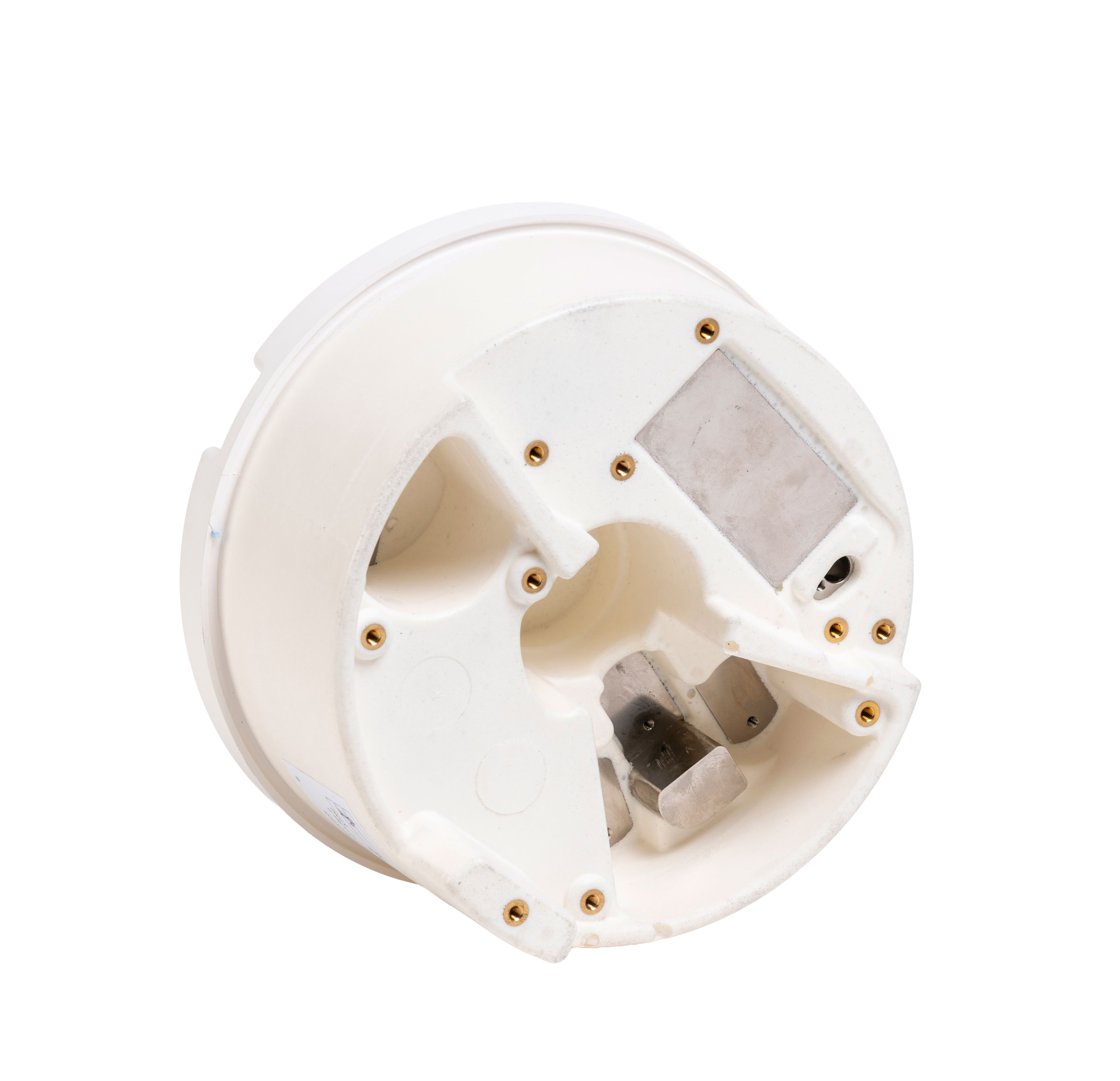
We check the insert choice against the material on every CAD file before we print. The choice between threaded inserts, self-tappers and helicoils matters. It affects how well the thread holds, how much pull it takes and how long it lasts. If the insert on the drawing does not suit the material or the shape, we tell you and agree a better one before we start.
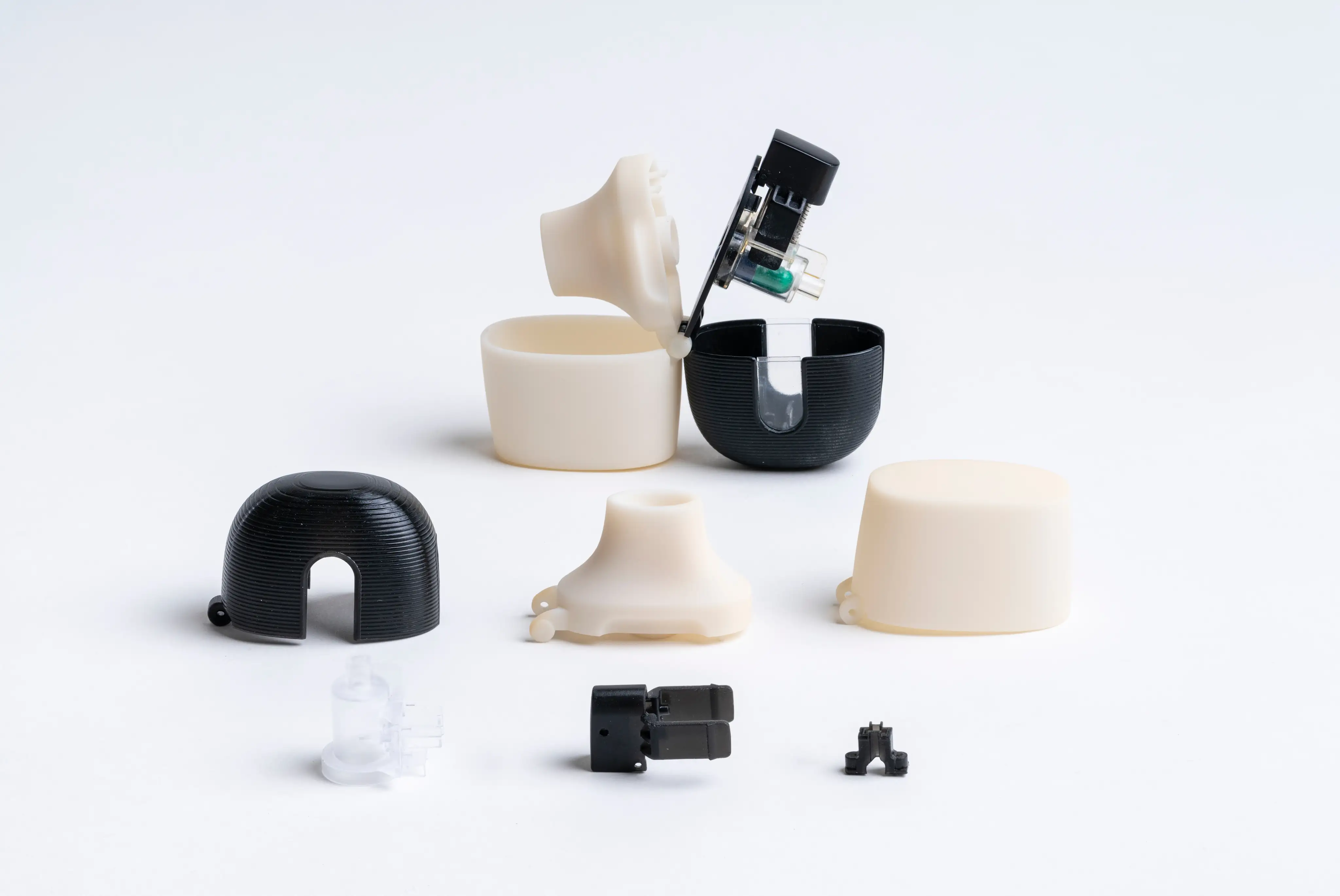
See what we have printed. We made 3D printed models of a compact IPL hair removal device so focus groups could test the ergonomics. We also printed an investor model of the Blackfin Mobile push-to-talk handset, the SLA master for the I-Dration water bottle and kitchen appliance display models for a catalogue shoot. To choose a process, read SLA or FDM, SLA or Carbon DLS and our rapid prototyping guide.
SLA parts in 24 hours as standard, held to ±0.15 mm, in materials chosen for the test.

Answers to common questions about our 3D printing and materials.
SLA parts hold ±0.15 mm, and FDM parts hold ±0.4 mm on suitable rigid parts. We check every file for printability before it goes to print and flag anything that could cause a problem.
Most jobs are ready the next day. If a job needs longer, we give you a clear timeline up front.
We quote fast. If you have a deadline, tell us and we will do our best to meet it. Our quotes are detailed and accurate, so there are no surprises later.
We ship overnight across the UK. Our cut-off times are dependable, so you do not have to chase at the last minute.
We check your CAD before printing and suggest changes that make parts stronger, cleaner and easier to produce.
Bead blasting is our standard finish, where applicable. Parts arrive with an even surface, ready to show.
We explain the material options, including lower-cost ones, so you can weigh performance against price.
No. We print single parts and batches of 20 to 200 in SLA, Carbon DLS and FDM, up to thousands in SLA, without tooling.
If a part is not right, we put it right quickly, because a delay costs you time as well as us.
Our standard turnaround is 24 hours, with no rush fee. Each of our SLA machines keeps its own resin loaded. We finish parts in-house, and we hold ISO 9001 (certificate 7774).
Yes. We carry biocompatible resins, and we keep researching new materials and processes.
STL, STEP, IGES, and native CAD files all work. We check geometry for printability and flag issues before production starts. Send your files and we'll confirm feasibility within hours.
We aim to offer same-day delivery in the local area.
It depends on the part: its size and volume, the process and material, how many you need and the finish. There is no tooling or set-up charge, so a single part is affordable and the price per part falls in a batch. We quote each job from your CAD, and our pricing guide explains what affects the price.
A 3D printer builds a part layer by layer from a CAD file. SLA cures liquid resin with a UV laser, Carbon DLS cures resin with projected light, and FDM lays down melted plastic filament. Each layer bonds to the one below until the part is complete. We then clean it, remove any supports and finish it.
We don't 3D print metal. For metal prototypes and parts, we CNC machine from solid aluminium, steels, stainless steel and brass, so you get the real material. SLA parts can also be plated in copper, nickel or gold for a metallic finish, on small parts up to about a 150 mm cube.
We print prototypes for form and fit checks, working assemblies, and models for shows and photography. We also print clear parts such as light pipes, master patterns for vacuum casting, and jigs and fixtures. Production batches run from 20 to 200 parts or more. None of it needs tooling.
Yes. Carbon DLS makes parts with injection-moulding-like strength, so it suits end-use components, and we have run batches of 1,000 small parts. SLA batches typically run from 20 to 200 parts, and our largest was 5,000. For metal parts or engineering plastics such as PEEK, we CNC machine instead.
There is no minimum order. SLA batches are typically 20 to 200 parts and can run to thousands; our largest was 5,000. Carbon DLS suits small parts in larger numbers, up to batches of 1,000. Every resin stays loaded on its own machine, so different materials can print at the same time.
Yes, on our FDM printers, in chopped carbon fibre filaments: PA6-CF, PPA-CF and ASA-CF, plus glass-filled PA6-GF. The fibre makes parts stiffer and more heat resistant than unfilled plastics. We don't print continuous-fibre composites. Carbon DLS is a different process, named after the company Carbon, and contains no carbon fibre.
Resins and engineering thermoplastics. SLA resins include Accura Xtreme, Accura 25, MPC12 Clear and WaterClear Ultra. Carbon DLS resins include MPU 100, EPX 82, RPU 70 and elastomers such as EPU 40. FDM filaments include PETG, TPU and carbon or glass-filled nylons. Our materials page lists them all, with data sheets.
SLA parts hold ±0.15 mm, built in 0.05 mm layers, and holes print about 0.05 mm undersize on average. FDM holds ±0.4 mm on suitable rigid parts. Where a feature needs a tighter tolerance, CNC machining holds ±0.10 mm on most work.
Our largest SLA part is 450 × 450 × 450 mm, in MPC12 Clear. FDM builds parts in one piece up to 800 × 800 × 1,000 mm, mainly in PLA, PETG and TPU. Larger designs can be split and the sections joined with adhesive or mechanical fixings. See large format 3D printing.
For SLA, walls can be 0.4 mm where supported and 0.8 mm where unsupported. Holes should be at least 0.4 mm, embossed text 0.4 mm and engraved text 0.6 mm. Hollow parts need two drain holes of at least 3 mm, and mating parts need about 0.1 to 0.2 mm clearance per side.
Yes. We print clear parts in SLA resins such as WaterClear Ultra and MPC12 Clear, then sand and polish them for clarity. They suit light pipes, windows, fluid paths and display models, and thinner walls give a more natural clear finish. See clear 3D printing for examples.
Yes. Carbon DLS elastomers such as EPU 40, EPU 45 and SIL 30 give rubber-like parts, and we print TPU filaments on FDM. For seals and gaskets in silicone or polyurethane rubber, casting is often the better route; see flexible gaskets.
Yes, in specialist resins. Carbon EPX 86FR and Liqcreate Flame Retardant HDT are flame-retardant, and Loctite IND147, SuperHDT and Phrozen TR300 are made for high temperatures. Check each data sheet for the rating you need, or tell us the operating temperature and we will suggest a material.
Choose SLA for fine detail, smooth surfaces and clear parts, and Carbon DLS for strong, functional or end-use parts. FDM suits large parts and real thermoplastics such as nylon and PETG, and DLP covers a few specialist resins. Tell us what the part has to do and we will recommend the process.
Yes. Both terms mean building a part layer by layer from a digital model. Additive manufacturing is the formal name used in standards and industry, and 3D printing is the everyday term.
Yes. We print SLA, Carbon DLS, DLP and FDM in our workshop in Whittlesford, near Cambridge, and finish the parts in the same building. We source SLS and MJF parts through partners for prototyping projects, and finish those in-house too.
Yes. We fit bonded threaded inserts, and we check the insert choice against the material on every CAD file before production. Where a self-tapper or helicoil would suit the material or geometry better, we raise it with you first.
It depends on the process and material. Carbon DLS parts have injection-moulding-like strength, FDM parts are made in real thermoplastics such as nylon, and tough SLA resins suit snap fits and mechanisms. Each material page lists the key properties from the maker's data sheet.
Send us your files or describe what you need. CAD received by 5:30 pm is usually delivered the next day when capacity allows, and we aim to quote SLA within 2 hours.